
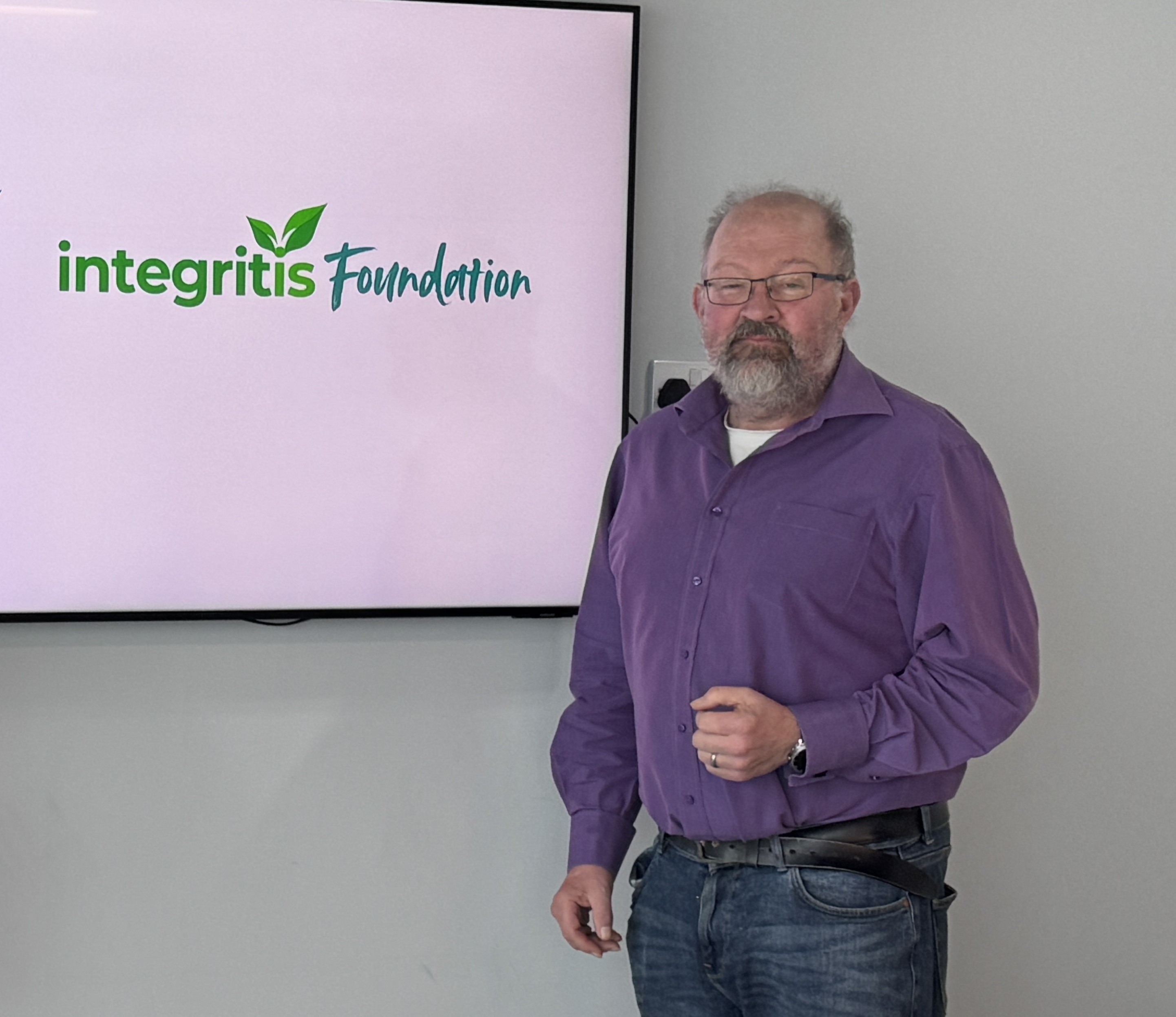
‘They had me at hello’: Mark Povey on why Integritis is the right home for JS-IG and for the Foundation
Following Integritis’ acquisition of JS Information Governance (JS-IG), founder and eleven-year British Army veteran Mark Povey joins the Integritis team as Sales Director and leader of the Integritis Foundation — the company’s veteran-focused social impact arm. He speaks about why now was the right moment, what JS-IG brings into the business, and the full-circle moment this marks in his career.
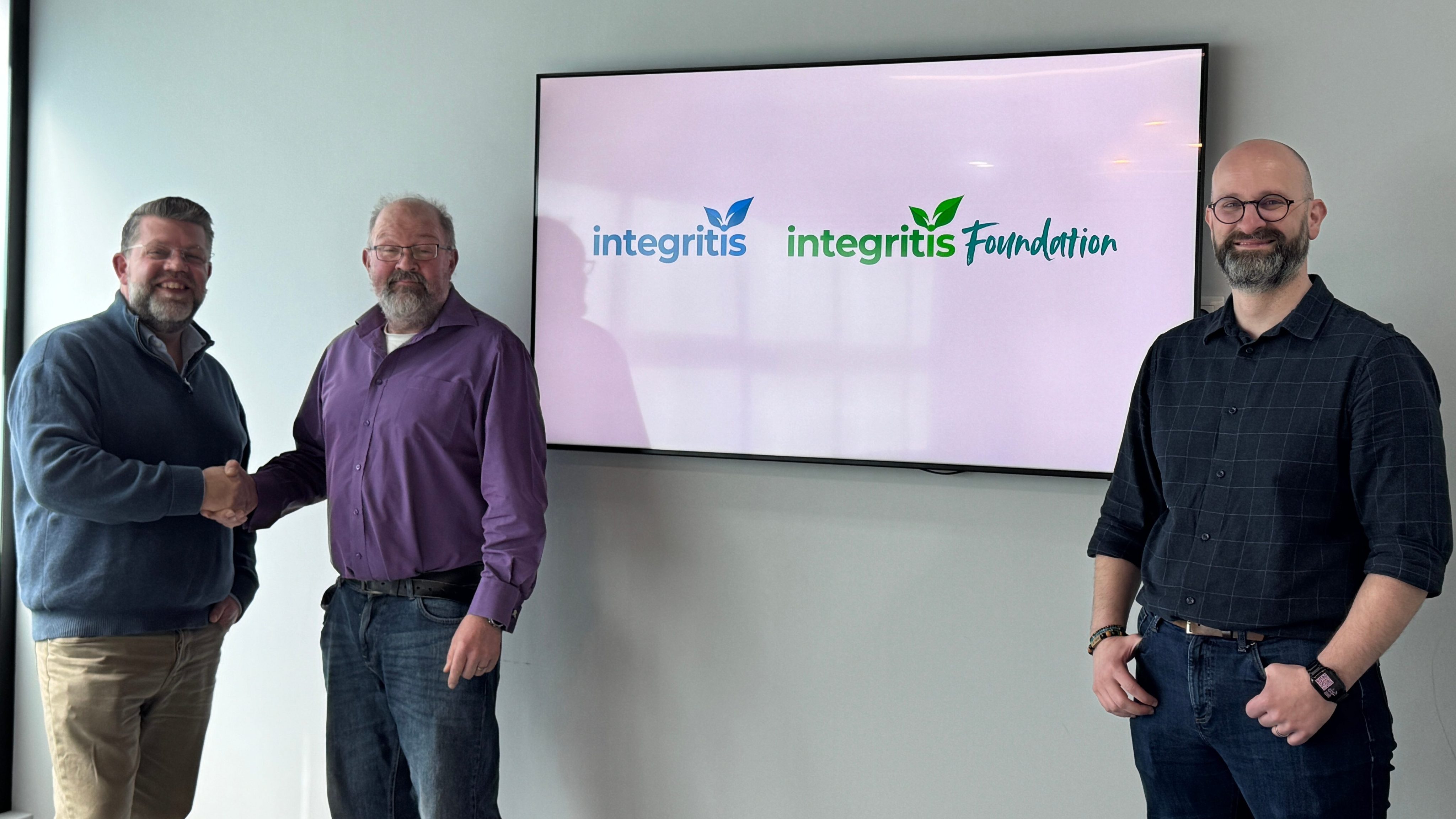
Q: Why was now the right time to merge JS-IG with Integritis?
A: A few things collided at once. I’m the MD of JS-IG, and after having a stroke last year, you can’t pretend you’re indestructible anymore — I could do with lightening the load. Kieran and Dave have been building something impressive at Integritis and are growing fast. They needed specialist data protection, information governance and regulatory capability to serve their scale-up clients, and JS-IG is that capability ready-made. It’s a genuinely complementary fit, commercially and structurally — and personally, it’s the right moment to step into work I care more deeply about.
Q: You’d had a higher offer from another buyer before this one. What made working with Kieran and Dave different?
A: The earlier offer was better on paper, but the buyer kept stalling. When they came back, they wanted us to do work for them rather than acquire us outright. Integritis is a different proposition entirely. Kieran and I go back years — he used to do contracting work for me — and Dave is the same kind of operator. They have proven form, having built and scaled businesses together at Differentis and Scrannery, which means when they talk about what scale-ups need operationally, they’ve lived it. They’re disciplined in a way I respect. When I started talking to Dave, my internal nonsense detector stayed quiet, and that matters to me. This is a deal driven by relationships and values, not numbers alone — which is why this one went through when the previous one didn’t.
Q: What does JS-IG bring into Integritis?
A: JS-IG is a specialised data protection, information governance, and regulatory consultancy with nine years of trading behind it. Our core work spans Data Subject Access Requests (DSARs), Freedom of Information (FOIA), outsourced Data Protection Officer (DPO) services and UK GDPR compliance — the disciplines where scale-ups increasingly find themselves exposed. The client base spans regulated sectors; we’ve just picked up a Harley Street gynaecology practice, for example, through a chairman who first came to us via a DSAR nightmare.
A lot of what we bring is discipline. Recently, I fired a supplier for trying to access knowledge they had no business seeing. That’s the bar — and it’s the bar we set on behalf of every client. For Integritis, what we add is real depth alongside its existing Assurance pillar. For clients, it means a single accountable partner that can take responsibility for the regulatory engine room, not just the commercial operations around it.
Q: You’re stepping into the Integritis Foundation as its leader. Why is that the right next step for you?
A: The Foundation is personal. The Army gave me skills I didn’t always know I had — problem-solving, resilience, discipline, the ability to stay calm and work a problem — but the forces rarely tell you what those skills actually are in civilian terms. The numbers tell the story: research shows 52% of veterans end up in roles below their skill level, 8% are unemployed, and 20% claim unemployment benefits shortly after transition. Too many veterans leave service feeling they’ve got nothing transferable. That’s wrong.
The Integritis Consulting Academy is about unlocking what veterans already know and translating it into long-term consultancy careers. Our target is to support 36 veterans through the Academy each year, building toward a Guild of 100 veteran consultants by 2028. My ambition is to make it free at the point of use, drawing on relationships I’ve built over decades — clients, contacts, mentors — to help underwrite that. It’s the work I most want to be doing with the next chapter in my career.
Q: You joined the Army at 16 and transitioned straight into civilian life. Does this feel like a full-circle moment?
A: It really is. I joined as a junior soldier, trained as a radio-telegraphist, served in Germany and the Gulf — including post-war cleanup, where snipers had been left behind to spoil people’s days. When people tell me they’re stressed, I tend to ask, ‘Have you been shot at?’ Different perspective.
I came out with a ‘Hello, world. What’s next?’ mindset and cracked on with civilian life. I was lucky. A lot of veterans aren’t — my stepbrother struggled after he left. The Army is enormously structured, and when that structure disappears, people can lose their footing.
For years, that sat at the back of my mind without me knowing what to do with it. What reopened it was my youngest son Max joining the Navy — he’s serving on HMS Queen Elizabeth now. I went down to his pass-out parade and wore my veteran’s badge for the first time in years. Strangers came up to thank me for my service. It had been so long since I’d thought of myself in that context that it genuinely moved me.
Not long after, Kieran told me about the Academy, and it hit immediately — a classic ‘you had me at hello’ moment. It was the exact thing I’d been trying to find a way to do without knowing how. Taking this on means I get to put back some of what I was given.
Q: And emotionally — what does this next phase feel like?
A: Exciting. I’m not retiring. I’m realigning my work to do more for the customer base, and more for the people I think need support. The Army gave me a lot. This is my chance to put some of it back in.